Views: 0 Author: Site Editor Publish Time: 2025-10-29 Origin: Site


Ever wondered how metal parts are shaped with precision and strength? Hydraulic Electric Upsetting Machines are the answer. These machines revolutionize metalworking, offering unmatched accuracy and efficiency. In this post, you'll learn about their core components, operational flow, integration capabilities, and industry applications.
Understanding the core components of a hydraulic electric upsetting machine is key to grasping how it works. These machines combine hydraulic power and electric control to perform precise metal forming. Here’s a breakdown of the main parts:
The ram is the heart of the machine, responsible for applying force to the metal workpiece. It can be powered hydraulically or by a servo motor:
Hydraulic Ram: Uses fluid pressure to generate strong, steady force. It offers smooth motion and high power for heavy-duty upsetting tasks.
Servo-Driven Ram: Uses an electric servo motor for precise control of speed and position. It allows for flexible operation and energy efficiency.
This ram presses the heated metal, causing plastic deformation to shape or strengthen the part. The choice between hydraulic and servo-driven rams depends on the application’s force requirements and control needs.
The electric motor converts electrical energy into mechanical movement. It powers the ram and other moving parts:
Drives the hydraulic pump in hydraulic systems.
Powers servo motors in servo-driven rams.
Enables rapid, repeatable motion cycles.
The motor's efficiency and reliability affect the machine's overall performance. Modern machines often use high-efficiency motors to reduce energy consumption and improve uptime.
Advanced hydraulic electric upsetting machines incorporate programmable logic controllers (PLCs) and software systems for automation and precision:
Programmable Controllers: Manage the sequence of operations, controlling ram movement, pressure, and heating cycles.
Sensors: Monitor temperature, force, and position in real time.
Software Integration: Allows operators to set parameters, monitor process data, and adjust settings remotely.
Automation: Enables repeatable, consistent production with minimal manual intervention.
Some systems integrate with CAD/CAM software, ERP, or MES platforms, improving workflow and data management across manufacturing processes.
Together, these components ensure the machine operates efficiently, safely, and with high precision, meeting demanding production standards. Regularly update and calibrate programmable controllers and sensors to maintain precise control and consistent product quality in hydraulic electric upsetting machines.
Understanding the step-by-step operation of hydraulic electric upsetting machines helps clarify how they reshape metal parts precisely and efficiently. This process combines mechanical force, heat, and control systems to deform metal workpieces into desired shapes. Here’s a detailed look at each phase:
Before starting, the operator carefully loads the metal workpiece into the machine’s die assembly or fixture. Proper alignment is crucial to ensure uniform deformation and prevent defects. The workpiece is secured firmly to avoid movement during upsetting. Modern machines may use robotic arms or automated feeders to improve loading speed and reduce manual labor.
Depending on the material and application, the workpiece often requires heating to improve formability. Some hydraulic electric upsetting machines feature integrated heating systems—either electrical resistance heating or induction heating—that raise the metal's temperature uniformly. Sensors constantly monitor temperature to achieve optimal heating without overheating. Once the set temperature is reached, the machine activates the hydraulic or servo-driven ram.
The core upsetting process begins as the ram applies controlled, high force to the heated workpiece. This force causes plastic deformation, reshaping the metal by increasing its cross-section or forming heads, shoulders, or other features. The programmable controller precisely adjusts ram speed, stroke, and pressure to match the material properties and desired geometry. Real-time feedback from force and position sensors ensures accuracy and repeatability throughout the stroke.
After deformation, the workpiece is cooled either naturally or by controlled cooling systems to stabilize its shape and mechanical properties. Some machines include automated finishing steps like trimming excess material or surface treatments. Finally, quality inspection occurs, often using vision systems or coordinate measuring machines (CMMs) to verify dimensions and surface quality. Data collected during inspection can feed back into process controls for continuous improvement.
This entire operational flow is often automated and monitored through integrated software, reducing human error and increasing throughput. The combination of precise force application, controlled heating, and real-time monitoring ensures high-quality forged parts with minimal waste.
Tip: Use sensors and programmable controllers to monitor temperature and force throughout the upsetting process, ensuring consistent quality and reducing scrap rates.
Hydraulic electric upsetting machines today are designed not only for performance but also for seamless integration into modern manufacturing environments. Their interoperability with other systems and compliance with industry standards ensure smooth operation, enhanced productivity, and easier management. Let’s explore the key integration and interoperability features.
These machines adhere to widely recognized industry standards to guarantee safety, quality, and compatibility:
ISO Standards: Ensures consistent quality management and environmental management systems.
IEC Standards: Covers electrical safety and electromagnetic compatibility.
CE Marking: Confirms conformity with European health, safety, and environmental protection requirements.
UL Certification: Validates compliance with North American safety standards.
Compliance ensures machines meet global regulatory requirements, facilitating international deployment and reducing liability risks. It also assures users of reliable and safe operation under rigorous industrial conditions.
Hydraulic electric upsetting machines increasingly connect with enterprise resource planning (ERP) and manufacturing execution systems (MES) to streamline production workflows:
Data Exchange: Real-time sharing of operational data such as cycle times, throughput, and maintenance status.
Process Optimization: MES can adjust machine parameters based on production schedules or quality feedback.
Inventory Management: ERP systems track raw materials and finished goods, linking machine output to supply chain management.
Traceability: Detailed records of each workpiece’s processing history improve quality control and compliance reporting.
This integration helps manufacturers reduce downtime, improve resource utilization, and respond quickly to production changes.
Modern hydraulic electric upsetting machines often support remote monitoring and IoT connectivity, enabling smarter factory operations:
Real-Time Monitoring: Operators and managers can track machine status, performance metrics, and alerts from anywhere.
Predictive Maintenance: IoT sensors collect data on vibration, temperature, and pressure to predict failures before they occur.
Cloud Integration: Data aggregation in the cloud facilitates big data analytics and continuous process improvement.
Remote Control: Authorized personnel can adjust machine settings or initiate diagnostics remotely, reducing the need for onsite interventions.
IoT connectivity empowers manufacturers to implement Industry 4.0 initiatives, boosting efficiency and lowering operational costs. Ensure your hydraulic electric upsetting machine supports open communication protocols like OPC UA or MQTT for seamless integration with your factory’s ERP, MES, and IoT platforms.
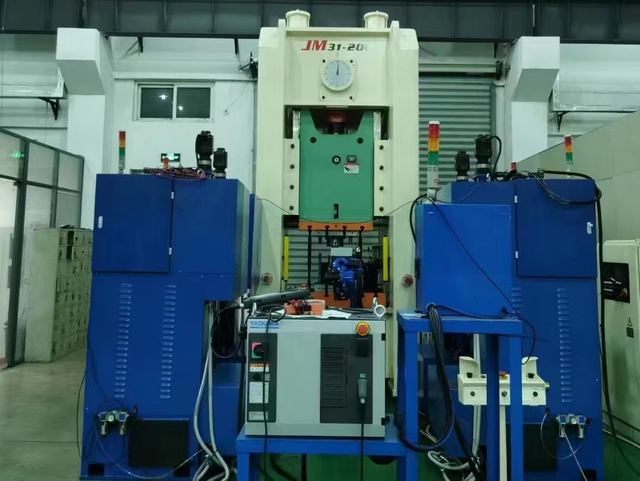
Ensuring reliability, security, and cost-effectiveness is crucial when operating hydraulic electric upsetting machines. These factors directly impact production uptime, safety, and financial performance. Let’s examine each aspect in detail.
Robust hardware design forms the foundation of machine reliability. Components must withstand high mechanical stresses, thermal cycles, and continuous operation. Key design elements include:
Durable Materials: Frames, rams, and dies use high-strength alloys and heat-resistant materials to resist wear and deformation.
Precision Engineering: Tight tolerances prevent misalignment and uneven force distribution, reducing machine fatigue.
Redundancy: Critical systems often have backup sensors and controls to avoid unexpected stoppages.
Modular Components: Facilitate easy replacement and reduce downtime during maintenance.
Regular preventive maintenance extends machine life and ensures consistent performance. This includes lubrication, inspection of hydraulic seals, checking electrical connections, and calibration of sensors and controllers. Predictive maintenance, using sensor data to forecast failures, is becoming standard practice to minimize unplanned downtime.
As these machines increasingly connect to networks and IoT platforms, cybersecurity becomes vital. Vulnerabilities could expose operations to unauthorized access, data theft, or sabotage. Essential cybersecurity practices include:
Network Segmentation: Isolating machine control networks from general IT networks limits attack surfaces.
Strong Authentication: Multi-factor authentication for remote access prevents unauthorized control.
Encryption: Secures data transmission between machines, controllers, and monitoring systems.
Regular Updates: Firmware and software patches address known vulnerabilities.
Access Controls: Role-based permissions restrict sensitive operations to qualified personnel.
Manufacturers adopting Industry 4.0 principles must integrate cybersecurity from the design phase to protect intellectual property and ensure uninterrupted production.
The financial impact of hydraulic electric upsetting machines involves several factors:
Initial Investment: High-quality machines with advanced control systems and integration capabilities require significant upfront capital. Costs vary by machine size, force capacity, and automation level.
Operating Costs: Energy consumption, hydraulic fluid, tooling wear, and labor contribute to ongoing expenses. Efficient electric motors and optimized hydraulic systems help reduce power costs.
Maintenance Costs: Scheduled maintenance and occasional repairs add to operational budgets. Predictive maintenance can lower these costs by preventing major failures.
Productivity Gains: Automation, precise control, and integration with production systems improve throughput and reduce scrap, offsetting higher initial costs.
Return on Investment (ROI): Calculated based on increased production quality, reduced downtime, and material savings.
Manufacturers should perform detailed cost-benefit analyses considering their specific production volumes and quality requirements to justify investments.
Hydraulic electric upsetting machines play a vital role across several industries. Their ability to precisely shape and strengthen metal parts makes them indispensable in manufacturing sectors requiring strong, high-quality components. Let's explore the main industries benefiting from this technology.
In automotive production, hydraulic electric upsetting machines forge critical components like engine shafts, transmission parts, and drive axles. These parts demand high strength and durability to withstand mechanical stresses during vehicle operation. Upsetting machines enable manufacturers to form these components efficiently, with consistent quality and minimal material waste. Automated loading and precise control also speed up production lines, meeting high-volume demands.
The aerospace sector uses hydraulic electric upsetting machines to shape high-strength alloys for aircraft structures, landing gear, and engine components. These parts must meet strict standards for weight, strength, and fatigue resistance. The machines’ ability to apply controlled force and heat ensures metal fibers align properly, enhancing mechanical properties. Additionally, programmable controls allow customization for complex geometries and tight tolerances typical in aerospace parts.
Tool and die manufacturers rely on hydraulic electric upsetting machines to create precise molds, punches, and dies. These tools require exact dimensions and surface finishes to produce consistent parts in other manufacturing processes. The machines’ accuracy and repeatability help reduce defects and extend tool life. They also allow forming of specialized shapes and features that improve tooling performance.
In heavy machinery manufacturing, upsetting machines form large structural elements such as shafts, pins, and couplings. These components must endure heavy loads and harsh environments. Hydraulic electric upsetting machines provide the necessary force and control to produce these durable parts reliably.
In electronics, smaller precision parts like connectors and fasteners are upset using these machines. The precise deformation improves mechanical strength and electrical conductivity, essential for reliable electronic assemblies.
Hydraulic electric upsetting machines are evolving rapidly, driven by innovations in automation, artificial intelligence, and connectivity. These advancements promise to boost productivity, precision, and adaptability across manufacturing sectors.
Industry 4.0 transforms traditional manufacturing by integrating smart technologies, data exchange, and automation. Hydraulic electric upsetting machines benefit greatly from this shift:
Smart Sensors and Data Analytics: Machines collect real-time data on force, temperature, and position. Analyzing this data helps optimize processes and predict maintenance needs.
Automated Workflows: Robotic arms and automated feeders reduce manual loading/unloading, increasing throughput and safety.
Digital Twins: Virtual replicas simulate machine behavior under different conditions, enabling fine-tuning without physical trials.
Adaptive Control: Systems dynamically adjust parameters during operation to maintain quality despite material or environmental variations.
These features reduce downtime, improve consistency, and allow manufacturers to respond quickly to changing production demands.
Artificial intelligence (AI) enhances machine control by learning from past operations and making real-time decisions:
Process Optimization: AI algorithms analyze sensor data to identify the best upsetting speed, pressure, and heating profile for each workpiece.
Defect Detection: Machine learning models detect anomalies or defects early, preventing scrap and rework.
Predictive Maintenance: AI forecasts component wear or failures before they happen, scheduling maintenance proactively.
Energy Efficiency: Intelligent control minimizes energy consumption by optimizing motor and hydraulic system usage.
By embedding AI, machines become more autonomous, efficient, and capable of handling complex production tasks with minimal human intervention.
The electric upsetting machine market is poised for steady growth, fueled by technological advancements and rising demand for high-quality forged components:
Market Expansion: Forecasts suggest a compound annual growth rate (CAGR) around 5% through the next decade, driven by automotive, aerospace, and heavy machinery sectors.
Increased Automation: More manufacturers will adopt fully automated upsetting lines integrated with factory-wide digital systems.
Customization and Flexibility: Machines will support diverse materials and geometries, catering to smaller batch sizes and rapid product changes.
Sustainability Focus: Energy-efficient designs and reduced material waste will align with environmental regulations and cost-saving goals.
Challenges include high initial investments and the need for skilled operators. However, as AI and IoT technologies mature, these barriers will diminish, accelerating adoption globally.
Hydraulic electric upsetting machines combine hydraulic power and electric control for precise metal forming. Key components include the ram, electric motor, and programmable controllers. The machines are vital in industries like automotive and aerospace, offering integration with ERP and MES systems for streamlined operations. Future trends focus on Industry 4.0 and AI-driven controls for enhanced efficiency. Jianuohao provides innovative solutions with these machines, ensuring high-quality production and adaptability to evolving industrial needs.
A: A Hydraulic Electric Upsetting Machine combines hydraulic power and electric control to precisely form metal parts by applying controlled force and heat.
A: It works by loading a workpiece, heating it, and using a ram to apply force, causing deformation. The process is controlled by programmable logic controllers for precision.
A: These machines offer precise control, automation, and integration with manufacturing systems, leading to high-quality production and reduced waste.


